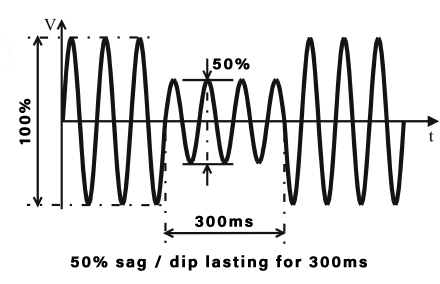
External factors, which are more likely to produce singular events, include short-term reductions in supply voltage caused by load switching and fault clearance in the supply network. A similar effect can occur when switching between the mains supply and uninterruptible power supplies or emergency back-up generators. Common causes of voltage dips within an installation include the switching on and off of large loads including electric motors, arc furnaces and welding equipment, or possibly even loads with pulsating current demands. These may appear as more regular occurrences and at particular times.
The effect that a dip has on the other equipment and the occupants within an installation varies widely, and is dependent on a variety of factors including both the nature of the event itself and the equipment within the installation. It is perfectly possible, for example, for an office environment with equipment powered by switched mode power supplies and UPS systems, fitted out with fluorescent lighting, to experience dips and never even know. However, the same office fitted with different lighting could experience regular and irritating flicker. Flicker is the effect of random and repetitive variations in voltage resulting in rapid visible changes in brightening and dimming of lighting equipment.
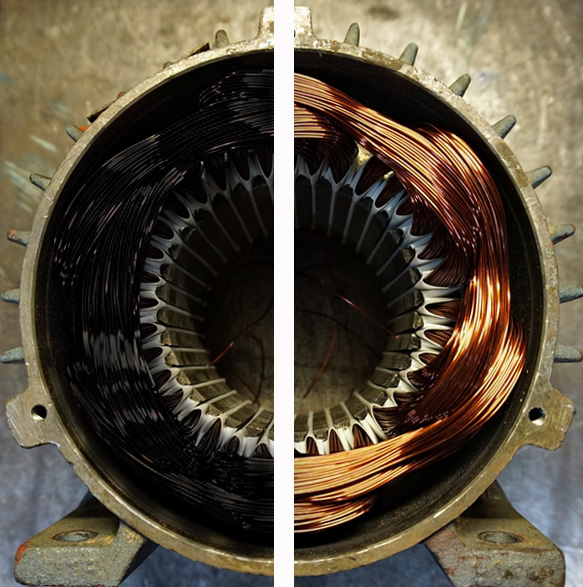
A dipping supply voltage can cause particular problems for AC induction motors and with varying severity. As the supply voltage to the induction motor decreases, the motor speed decreases, and depending on the size and the duration of the voltage dip, the motor speed may recover to its normal value as the voltage amplitude recovers. If the voltage dip magnitude and/or duration exceed certain limits the motor may stall, an undervoltage trip may operate or a contactor drop out, or variable speed drives may shut down to prevent potential motor damage.
Voltage swells are simply the opposite to dips and defined as a sudden increase in the supply voltage of 10% or greater followed by a voltage recovery after a short period of time. Again, generally, between 10ms and 1 minute. Swells are almost exclusively caused when a heavy load is turned off somewhere on the power supply network or in the installation itself.