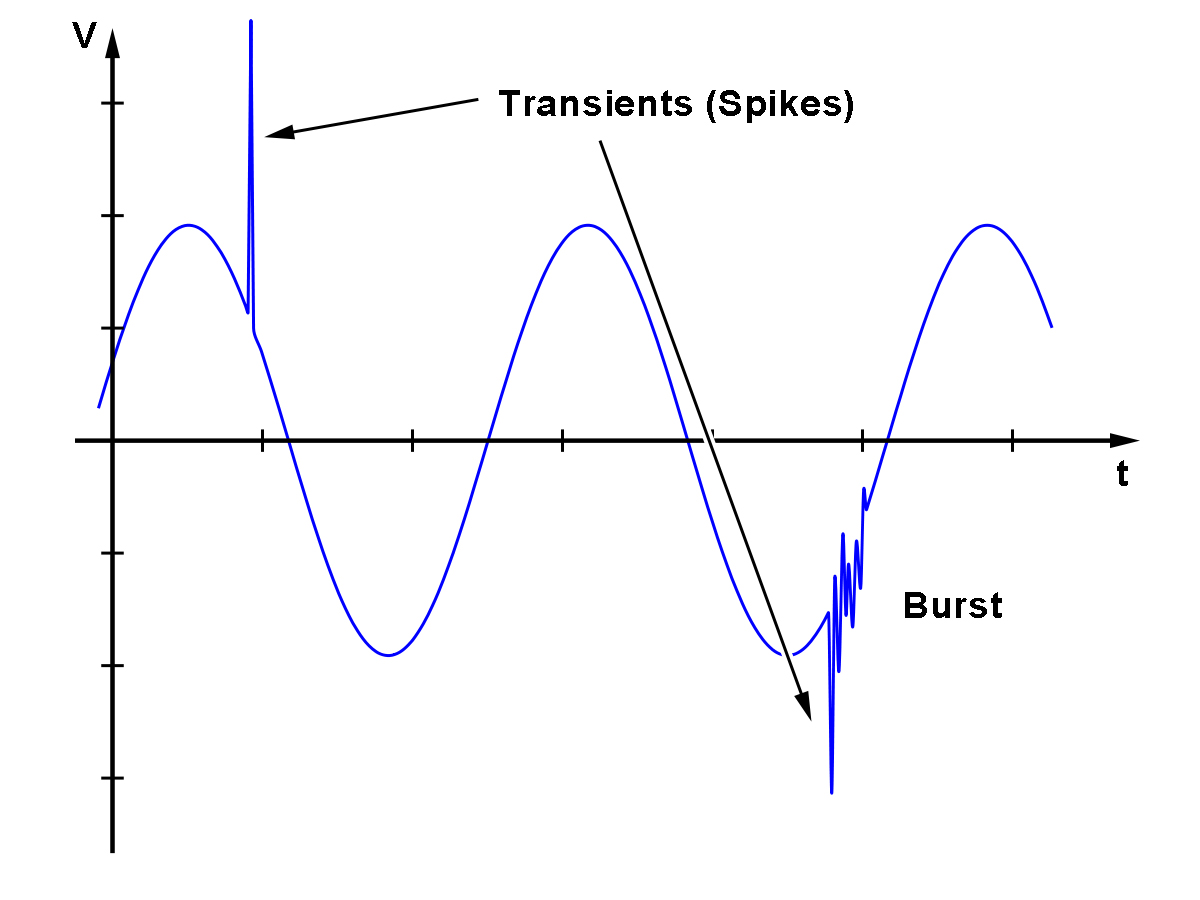
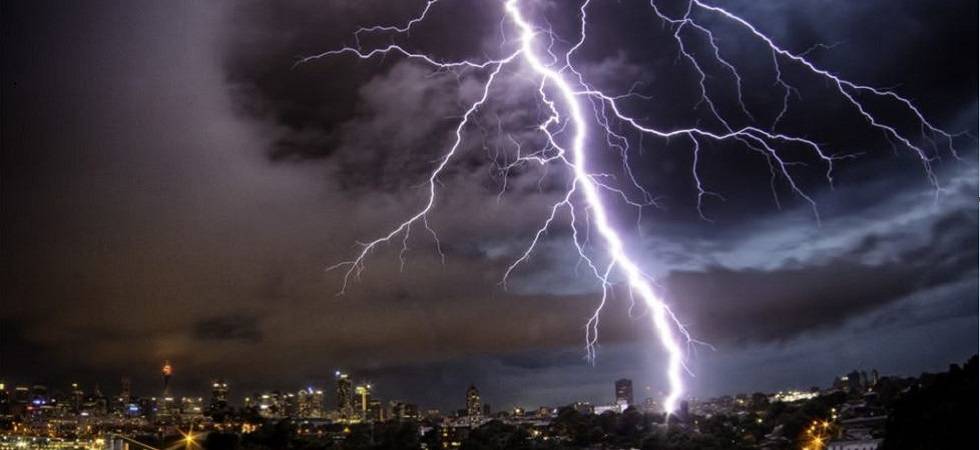
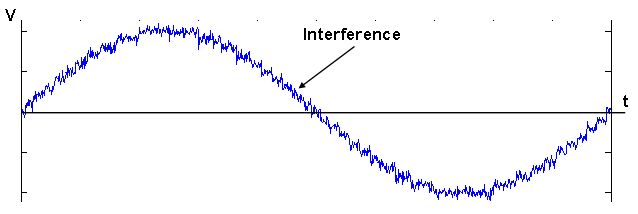
Other infrequent external factors like load switching and fault clearance within the utility supply can generate transients, although generally smaller than those generated by lightning. This is due to either the interaction between magnetic and electrostatic energy stored in the inductance and capacitance of the circuit, and a load being connected to it during the closing of the switch contacts, or the interaction between the mechanical energy stored in rotating machines, and the energy stored in the inductance and capacitance of the circuit, when additional generation capacity is switched in and out.
Transients are more often produced from within the installation each time a switching operation occurs, such as bus transfer switching or even a normal circuit breaker or contactor opening or closing. Simply turning a light switch on or off can create a transient, and in all cases the transients generated will be worsened by breakers and switches arcing due to faulty or corroded contacts. Abnormal events such as MCBs tripping during the clearing of faults also cause transients.
Office equipment such as photocopiers and laser printers are notorious for generating transients, as are HVAC systems. In fact, whenever an inductive or capacitive load is either connected to or disconnected from the power source it generates a surge impulse that propagates back through the electrical system.
That shock you get after you walk across a carpeted office and touch the coffee machine, resulting from the static electricity generated through the interaction between your shoes and the flooring material, can also induce a transient into the mains supply.